
MotoGP bodywork sets are crucial for a bike’s performance, significantly impacting aerodynamics and handling. This intricate system of fairings, wings, and other components is meticulously designed to optimize speed, stability, and rider comfort at breakneck speeds. Understanding the nuances of MotoGP bodywork design reveals a fascinating interplay between engineering prowess and the relentless pursuit of milliseconds gained on the track.
The aerodynamic advantages offered by these meticulously crafted pieces are not merely cosmetic; they represent a substantial competitive edge in the world of professional motorcycle racing.
The development of MotoGP bodywork involves extensive wind tunnel testing, computational fluid dynamics (CFD) simulations, and rigorous on-track evaluations. Teams constantly refine their designs, seeking marginal gains in downforce, drag reduction, and overall aerodynamic efficiency. The materials used are lightweight yet incredibly strong, able to withstand the immense stresses of high-speed cornering and potential crashes. The precise placement and shaping of each component are critical to achieving the desired aerodynamic balance.
MotoGP, the pinnacle of motorcycle racing, is a spectacle of speed, skill, and technological innovation. A crucial element contributing to a rider’s performance and a team’s competitiveness is the motorcycle’s bodywork. This detailed guide delves into the intricacies of MotoGP bodywork sets, exploring their design, function, aerodynamics, materials, and the impact they have on race results. We’ll cover everything from fairings and winglets to the ongoing development and future trends in this critical area of motorcycle technology.
The Anatomy of a MotoGP Bodywork Set
A MotoGP bodywork set isn’t simply a collection of plastic panels; it’s a meticulously engineered system designed to optimize performance across multiple aspects. Let’s break down the key components:
Fairings: The Foundation of Aerodynamics
The fairings are the large, sculpted panels that enclose the motorcycle’s engine, chassis, and other mechanical components. Their primary function is to manage airflow around the bike, minimizing drag and maximizing downforce. The design is far from arbitrary; every curve and edge is carefully calculated using Computational Fluid Dynamics (CFD) simulations to achieve optimal aerodynamic efficiency at various speeds and track conditions.
Different fairings might be used depending on the track’s characteristics – a high-speed circuit might necessitate a fairing optimized for minimal drag, while a twisty track may benefit from a design prioritizing downforce and stability.
Winglets: Enhancing Downforce and Stability
Winglets, those small, wing-like appendages found on the front and sometimes rear of the motorcycle, play a significant role in generating downforce. They work by manipulating airflow, creating a pressure difference that pushes the bike down onto the track. Increased downforce improves traction, particularly through corners, allowing riders to brake later and accelerate earlier. The design and placement of winglets are crucial; improper design can lead to increased drag or instability.
The number and configuration of winglets can also vary depending on the track and rider preferences. Recent regulations have aimed to control the size and effectiveness of winglets to ensure fair competition.
Underbody Aerodynamics: Hidden Performance Gains, MotoGP bodywork set
While the visible fairings and winglets are striking, the underbody aerodynamics are equally crucial. The design of the undertray and other components beneath the motorcycle significantly impacts airflow, reducing drag and enhancing stability. Careful shaping of the underbody can help to create a ground effect, further increasing downforce. This area is often subject to intense development, with teams constantly refining the design to extract every ounce of performance.
Materials: A Balance of Strength and Weight
The materials used in MotoGP bodywork are chosen for their strength-to-weight ratio. Carbon fiber is the dominant material, offering exceptional strength and stiffness while remaining remarkably lightweight. This allows for aggressive aerodynamic designs without compromising handling or performance. Other materials, such as Kevlar and various composites, may be incorporated for specific purposes, such as impact resistance or reinforcement in high-stress areas.
The manufacturing process involves sophisticated techniques to ensure the precision and quality required for top-level competition.
The Impact of Bodywork on MotoGP Performance: MotoGP Bodywork Set
The impact of bodywork on MotoGP performance is substantial, influencing several key aspects:
Cornering Speed and Stability:
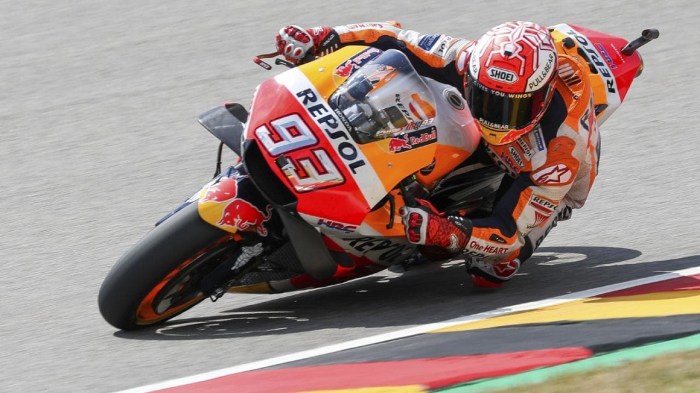
Optimized bodywork significantly improves cornering speed and stability. Increased downforce allows riders to carry more speed through corners, reducing lap times. The precise design of the fairings and winglets helps to maintain stability and control, even under extreme lean angles.
Braking Performance:
The increased downforce generated by the bodywork improves braking performance. By keeping the tires firmly planted on the track, riders can brake later and harder, gaining a crucial advantage on the straights.
Acceleration:
While downforce improves cornering, minimizing drag is essential for acceleration. The carefully sculpted fairings reduce air resistance, allowing for quicker acceleration out of corners.
Rider Ergonomics:
While not directly related to aerodynamics, the design of the fairings also influences rider ergonomics. The fairing’s shape and position can impact the rider’s posture, comfort, and ultimately, their performance.
Technological Advancements and Future Trends
The development of MotoGP bodywork is a continuous process of refinement and innovation. Teams constantly experiment with new designs, materials, and manufacturing techniques to gain a competitive edge. Some notable trends include:
- Advanced CFD Simulations: Sophisticated computational fluid dynamics simulations are used to optimize bodywork design, allowing teams to test numerous variations virtually before building physical prototypes.
- Active Aerodynamics: Research into active aerodynamic systems, such as adjustable winglets or flaps, is ongoing. These systems could allow for real-time adjustments to the bodywork’s aerodynamic characteristics based on track conditions and riding style.
- Lightweight Materials: The pursuit of lighter and stronger materials continues, with ongoing research into advanced composites and other innovative materials.
- Data Acquisition and Analysis: Extensive data acquisition systems are used to monitor the performance of the bodywork in real-time, providing valuable insights for further development.
Frequently Asked Questions (FAQ)
- Q: What is the purpose of winglets in MotoGP? A: Winglets generate downforce, increasing traction and allowing riders to brake later and accelerate earlier.
- Q: What material is typically used for MotoGP bodywork? A: Carbon fiber is the dominant material due to its high strength-to-weight ratio.
- Q: How does bodywork affect cornering speed? A: Increased downforce from the bodywork improves traction, allowing for higher cornering speeds.
- Q: How is bodywork design optimized? A: Computational Fluid Dynamics (CFD) simulations play a crucial role in optimizing bodywork design.
- Q: What are some future trends in MotoGP bodywork? A: Active aerodynamics and the use of even lighter materials are key areas of ongoing development.
References
While specific team data is proprietary, general information on aerodynamic principles and motorsport technology can be found in various sources. Searching for terms like “Computational Fluid Dynamics in Motorsport,” “Aerodynamics of Motorcycles,” and “Carbon Fiber Composites” will yield relevant academic papers and engineering publications.
Call to Action
Want to learn more about the intricate world of MotoGP technology? Explore our other articles on engine technology, tire development, and rider training to gain a deeper understanding of what makes MotoGP the ultimate motorsport challenge. Subscribe to our newsletter for the latest updates and insights!
FAQs
What materials are typically used in MotoGP bodywork?
Carbon fiber is the most common material due to its high strength-to-weight ratio. Other materials like Kevlar and various composites are also employed.
How often are MotoGP bodywork sets changed?
This varies depending on track conditions, crashes, and team strategy. Teams may use multiple sets per weekend, and significant damage often necessitates a replacement.
What is the role of winglets in MotoGP bodywork?
Winglets generate downforce, improving stability at high speeds and allowing for increased cornering speeds.