
MotoGP brake systems represent the pinnacle of braking technology in motorcycle racing. These systems are not merely components; they are finely tuned engineering marvels, crucial for achieving the blistering speeds and demanding cornering capabilities characteristic of MotoGP. The immense forces generated during braking necessitate incredibly robust and responsive systems, pushing the boundaries of materials science and design. This exploration delves into the intricacies of these high-performance braking systems.
Factors such as brake material composition, caliper design, and sophisticated electronics all play critical roles in determining a rider’s ability to control their machine at the limits of grip. Understanding the nuances of MotoGP brake systems provides insight into the technological innovation driving the sport’s evolution.
MotoGP, the pinnacle of motorcycle racing, demands the absolute best in every component. Nowhere is this more evident than in the braking system. These aren’t your everyday motorcycle brakes; they’re meticulously engineered masterpieces designed to withstand immense forces and deliver consistent, reliable stopping power at speeds exceeding 200 mph. This article delves into the intricate details of MotoGP brake systems, exploring their components, technology, and the physics that govern their performance.
We’ll cover everything from brake calipers and rotors to brake fluid and rider input, providing a comprehensive understanding of this crucial aspect of MotoGP racing.
The Core Components: A Detailed Breakdown
The MotoGP brake system is a complex interplay of several key components, each playing a critical role in achieving optimal braking performance. Let’s explore these in detail:
1. Brake Calipers
The Force Multipliers
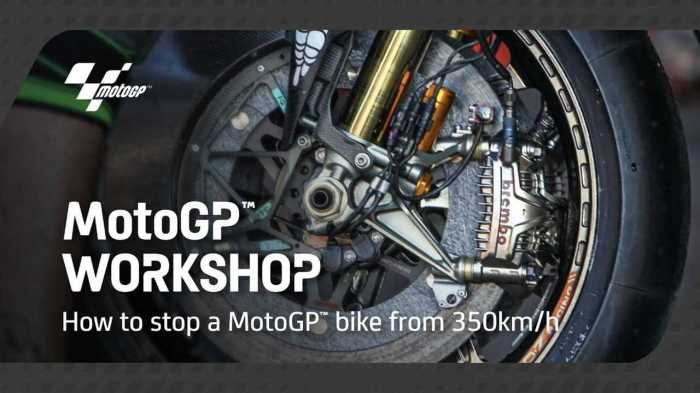
MotoGP bikes typically utilize radial-mounted, monobloc calipers, often made from forged aluminum or carbon fiber. These calipers house multiple pistons (typically four or six) that push the brake pads against the rotor. The radial mounting provides superior rigidity compared to axial mounting, minimizing flex under extreme braking forces and ensuring precise pad contact. The monobloc design, a single casting, further enhances stiffness and reduces weight.
Materials like titanium are also used for weight reduction in some top-tier teams. The number of pistons and their size directly influence braking power and feel.
2. Brake Rotors
Managing Heat and Force
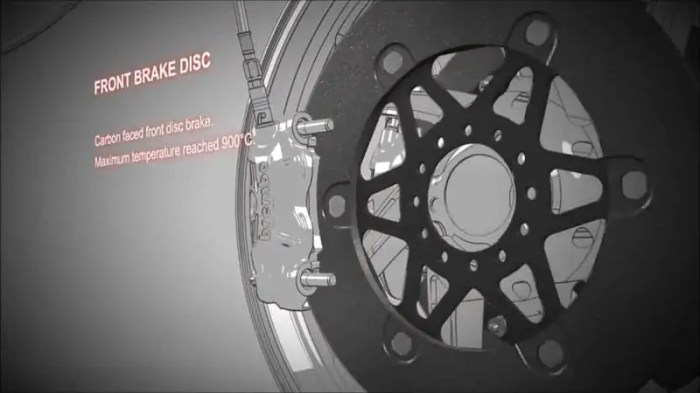
MotoGP brake rotors are significantly larger than those found on road bikes, typically ranging from 320mm to 340mm in diameter. They’re usually made from high-carbon steel or carbon ceramic composite (CCM). Steel rotors are more affordable but generate more heat, while CCM rotors offer superior heat dissipation, reducing brake fade and providing consistent performance throughout a race.
The rotor’s design, including the number and shape of ventilation holes, is crucial for cooling. The floating design, where the rotor is allowed to slightly move independently of the hub, reduces stress and vibration.
3. Brake Pads
Friction and Temperature Control
Brake pad material is a critical factor in braking performance. MotoGP teams use specialized brake pads with high friction coefficients, capable of withstanding extreme temperatures. The pad material composition is closely guarded, often featuring proprietary blends of carbon, metals, and resins. The pad’s ability to maintain consistent friction at high temperatures is crucial to prevent brake fade, a phenomenon where braking power diminishes due to overheating.
Different pad compounds are selected based on track conditions and ambient temperature.
4. Brake Lines and Fluid
The Hydraulic Heart
High-performance brake lines, often made from stainless steel braided lines, are used to minimize expansion under pressure. These lines ensure consistent brake pressure transfer from the lever to the calipers. The brake fluid itself is a specialized, high-boiling-point fluid that can withstand the extreme temperatures generated during intense braking. This prevents vapor lock, a condition where the fluid boils and loses its ability to transfer pressure.
5. Brake Master Cylinder
Rider Input to Hydraulic Power
The brake master cylinder is the interface between the rider and the hydraulic system. It converts the rider’s lever pressure into hydraulic pressure, which is then transmitted to the calipers. The master cylinder’s design and adjustability are critical for providing the rider with precise control and feedback.
Advanced Technologies and Innovations
MotoGP brake systems constantly evolve, incorporating cutting-edge technologies to improve performance and safety. Some notable advancements include:
- Carbon Ceramic Composite (CCM) Rotors: Offering superior heat dissipation and lighter weight compared to steel rotors.
- Brembo Stylema Calipers: Known for their compact design and increased rigidity.
- Electronic Brake Control Systems (EBC): These systems provide sophisticated rider aids, such as anti-lock braking (ABS) and traction control, enhancing safety and performance.
- Data Acquisition and Telemetry: Sophisticated data acquisition systems monitor brake temperature, pressure, and other parameters, providing valuable insights for optimizing brake performance.
The Physics of MotoGP Braking
Understanding the physics behind MotoGP braking is essential to appreciating the complexities of the system. Key factors include:
- Friction: The primary force responsible for slowing the bike down. The coefficient of friction between the brake pads and rotor is critical.
- Inertia: The tendency of an object to resist changes in its motion. Overcoming inertia requires significant braking force at high speeds.
- Heat Generation: Significant heat is generated during braking, which can lead to brake fade if not properly managed.
- Tire Grip: The amount of grip available from the tires limits the maximum braking force that can be applied before the tires lock up.
Frequently Asked Questions (FAQ)
- Q: What is brake fade? A: Brake fade is a reduction in braking effectiveness due to overheating of the brakes.
- Q: What are the benefits of CCM rotors? A: CCM rotors offer superior heat dissipation, lighter weight, and consistent performance compared to steel rotors.
- Q: How do electronic brake control systems work? A: EBC systems use sensors and electronic controls to manage braking pressure and prevent wheel lock-up.
- Q: Why are radial-mounted calipers preferred in MotoGP? A: Radial mounting provides superior rigidity, reducing flex under extreme braking forces.
- Q: What is the role of brake fluid? A: Brake fluid transmits pressure from the master cylinder to the calipers and must withstand high temperatures.
Conclusion: MotoGP Brake System
The MotoGP brake system is a marvel of engineering, a testament to the relentless pursuit of performance and safety. Its intricate components, advanced technologies, and underlying physics combine to deliver the stopping power needed to control these incredibly fast machines. Understanding these intricacies provides a deeper appreciation for the complexity and precision of this crucial element of MotoGP racing.
References
Call to Action
Want to learn more about the intricacies of motorcycle technology? Subscribe to our newsletter for more in-depth articles and updates on the latest advancements in motorsport engineering!
FAQ Explained
What materials are typically used in MotoGP brake rotors?
High-performance carbon fiber composite materials are commonly used due to their lightweight nature and exceptional heat resistance.
How do MotoGP brake systems differ from those on street bikes?
MotoGP systems utilize far more advanced materials, more powerful calipers, and sophisticated electronics for superior braking power and control under extreme conditions. They are also designed for significantly higher temperatures and braking forces.
What role does ABS play in MotoGP braking?
While ABS is not currently permitted in MotoGP, advanced electronic control systems manage brake pressure distribution to optimize performance and prevent lock-ups.